
Short answer: Choose a Certificate of Mailing when you need evidence that a piece was presented to USPS. Choose Certified Mail on eligible mail when you also need delivery or attempted-delivery information. Add Return Receipt when you need the available signature-bearing delivery record. Decide what your office must retain before preparing the mailing.
By PostageGrid Editorial Team. Postal sources checked October 5, 2026.
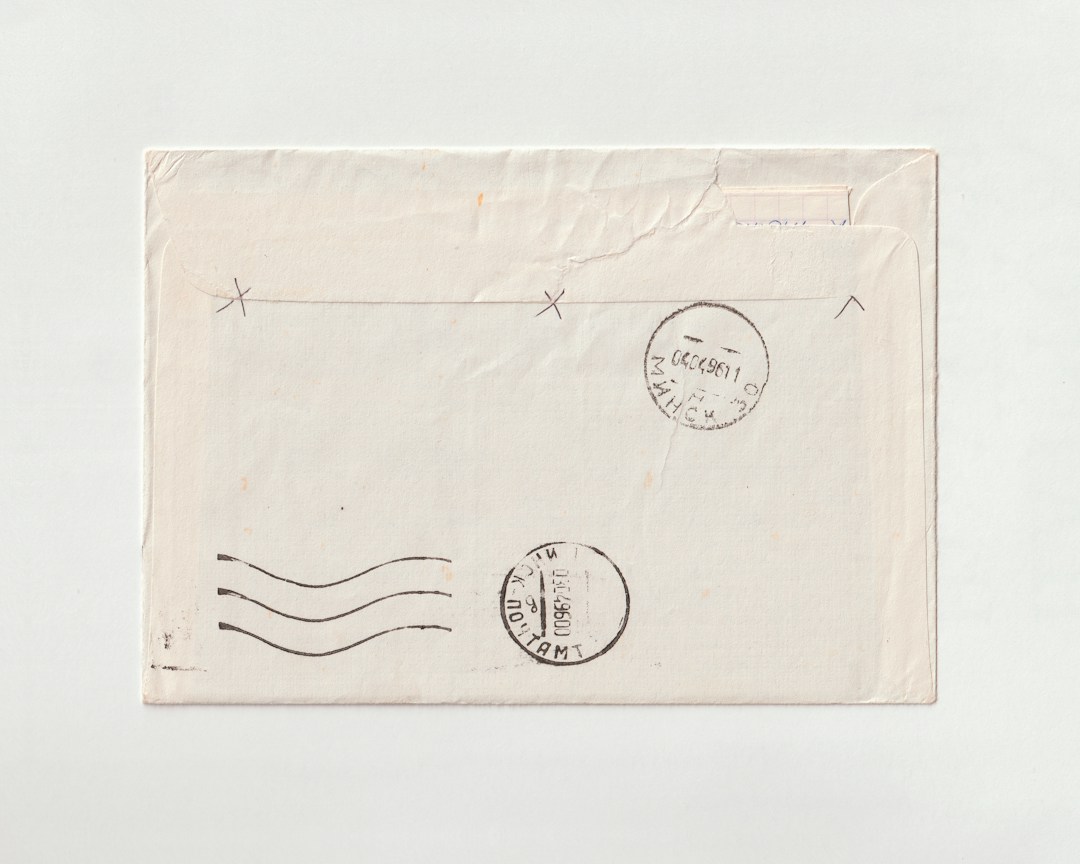
Compare the evidence, not just the service names
“We need proof” is too vague for an outgoing-mail request. Ask the requester to complete a specific sentence: “We need to retain evidence of presentation,” “We need delivery status,” or “We need a signature record.” That answer gives the mailing desk a useful requirement to check.
| Option | What it supplies | What to remember |
|---|---|---|
| Certificate of Mailing | Evidence of presentation for mailing | No delivery record; retain your certificate |
| Certified Mail | Mailing receipt and delivery or attempted-delivery verification | Choose eligible mail; postage and service fees are separate |
| Certified Mail with Return Receipt | An additional delivery record showing the recipient’s signature | Request the receipt option at mailing time |
The Domestic Mail Manual specifies Certificate of Mailing Form 3817 for fewer than three pieces at a retail Post Office and Form 3665 for three or more. Acceptance location rules also depend on the batch. For a large run, confirm the form and entry location with USPS before carrying the entire batch to a counter.
Three office examples
Routine customer letter: The request says only to send the letter, with no special evidence requirement. Keep it in the ordinary-mail workflow after the letter readiness checks. Avoid purchasing a service simply because its name sounds official.
Document requiring evidence of mailing: The requester explicitly asks for a record of presentation. Ask about a Certificate of Mailing and attach the returned certificate to your internal reference. Do not mark “delivered” in your office log just because you received that certificate.
Letter requiring delivery information: The requester needs to follow its delivery status. Check Certified Mail eligibility and whether a Return Receipt is also needed. Settle that decision before the envelope joins a routine stamp batch.
These are planning examples, not instructions for satisfying a legal notice or filing rule. Where the recipient specifies a particular service, use that requirement as the starting point.
Keep the envelope and its receipt connected
Create one private reference per mailing, such as CLIENT-LETTER-07. Use it to connect the address used, document version, service actually purchased, receipt location, and follow-up owner. Keep the full recipient details in your private business records.
- Have the requester approve the evidence requirement using your postage approval workflow.
- Check the assembled envelope, including its window address visibility when applicable.
- Obtain the selected service and review the returned receipt before leaving.
- File a readable scan alongside the original’s storage location.
- Assign any later status check to a named team member.
USPS does not retain copies of Certificates of Mailing. For a postmarked Certified Mail sender’s receipt, present the item to a postal employee. These are reasons to finish the receipt check at handoff rather than asking another department to reconstruct it later.
Budget without mixing postage and evidence
List base postage, the selected extra service, and any Return Receipt as separate budget lines. Use the current USPS fee page for the actual mailing date. This article intentionally gives no fixed fee: a planning worksheet should not become an outdated price quote.
For recurring work, maintain separate counts for ordinary letters and pieces needing extra services. Our office postage quantity guide helps organize volume; it does not select the evidence service for each letter.
Frequently asked questions
Does a Certificate of Mailing prove delivery?
No. It records presentation for mailing, not arrival at the recipient.
Does Certified Mail automatically include a Return Receipt?
No. Request the additional receipt when that record is needed. Keep the service choices distinct in your approval record.
Does Certified Mail make the letter an expedited service?
No. The Domestic Mail Manual says it is handled in transit as ordinary mail. Choose the underlying mail service separately.
What is the difference between proof of mailing and proof of delivery?
Proof of mailing shows that USPS accepted the piece on a specific date. Proof of delivery shows that it reached the addressee. Certificate of Mailing provides the first; Certified Mail with Return Receipt provides both.
Can I get a Certificate of Mailing after the item has been mailed?
No. A Certificate of Mailing is issued when the piece is presented for mailing, so it has to be requested at the counter at that moment.
Which USPS form is the Certificate of Mailing?
PS Form 3817 is the Certificate of Mailing form itself, available at a retail counter. If you present many accountable pieces at once, the counter will use a firm mailing sheet instead of one form per piece.
Proof of mailing: what USPS actually calls it
“Proof of mailing” is the umbrella term, and the three services that offices confuse sit at different levels of evidence:
| What it proves | Service | Typical form |
|---|---|---|
| The item was accepted by USPS | Certificate of Mailing | PS Form 3817 for an individual piece |
| That, plus tracking while in transit | Certified Mail | Retail receipt with the tracking number |
| That, plus signed delivery | Certified Mail with Return Receipt | PS Form 3811, the green card, or the electronic equivalent |
Only the last row proves delivery, and that distinction is what decides which service belongs in a client file. Choosing a service one level too low is the most common mailroom mistake: the file looks complete until someone asks whether the letter arrived.
Filling out PS Form 3817 at the counter
- Bring the finished, addressed and stamped piece to a retail window. A Certificate of Mailing is issued at the time of mailing, not afterwards.
- Complete the form with the mailer name and address, the addressee name and address, and the date.
- For several pieces going to different addresses, use a separate form for each, or the firm mailing sheet the clerk provides. Do not list unrelated pieces on one 3817.
- The clerk cancels the postage and returns your copy carrying the USPS round date stamp. That stamp is the evidence.
- File the copy with the invoice or client record the same day. Without the round date stamp it is only a form.
Certificate of Mailing is not a tracking service and gives no delivery confirmation, so it is the wrong tool when a client needs to see where a piece is. Choose the lowest service in the table above that still satisfies the requirement, and keep the record with the transaction it belongs to rather than in a separate pile.
Official sources
- USPS: Insurance & Extra Services — consumer service overview and current fees.
- USPS Domestic Mail Manual 503 — Certified Mail, Certificates of Mailing, and Return Receipt standards.
PostageGrid is an independent website. USPS determines service eligibility and acceptance for the actual mailpiece.